
Yes, you can rebuild a Wix website with AI — paste your URL and it comes back as an editable site — and from there Outlyne works as your conversion coach, suggesting changes that turn more visitors into inquiries and making them for you once you give the go-ahead. The part people get wrong is the SEO, so this guide walks through what actually carries your Google rankings, what does not transfer automatically, and how to make the switch without losing the traffic you already have.
Can you rebuild a Wix website with AI?
Yes. You do not need to export anything or touch code. Outlyne rebuilds from your live site: paste your Wix URL and it reads your pages the same way a visitor’s browser does, captures your text and structure, and rebuilds them as a new, editable site, starting with the page you pasted, usually your home page, with each of the others ready to build when you open it.
Why you do not need a Wix export
Wix has no “download my site” button that hands you usable HTML, but that’s ok. Outlyne’s AI does not need your source files. It visits your published pages, reads what is actually on them, and recreates that content on our platform. This is also why your site has to be live for the import to work: a free username.wixsite.com subdomain is enough, but an unpublished draft is not.
It rebuilds, it does not copy
The thing to understand up front is that this is a rebuild, not a clone. The AI is not lifting your Wix markup verbatim, it’s recreating your content as fresh, structured sections. That is what lets you keep editing afterward, and it is also why the SEO steps below matter: you are moving your content into a new house, so you want to bring the load-bearing parts with it.
One Wix-specific wrinkle is worth knowing. Wix server-renders the core of a page these days, but embeds, third-party widgets, and other dynamic blocks still arrive via JavaScript after the page loads. The Outlyne importer loads the page the way a real browser does, waits for that content to appear, and only then reads it. That said, if anything looks missing right after import, maybe due to a particularly slow dynamic block or third-party embed, you can paste that content in by hand or ask the Outlyne AI to recreate it for you.
Why do people move their website off Wix?
The usual reasons are cost, control, and lock-in. Wix is comfortable to start on, but people tend to move once they want a design that does not look like a template, a way out of the lock-in, or an easier way to make changes. Here is where that pressure usually comes from.
The editor fights you
Wix’s canvas lets you drag elements anywhere, which feels flexible until you need to change something. Move one block and the layout around it does not adjust, so you nudge everything by hand, and the separate mobile editor means you often do the work twice. Being able to describe a change in plain language and have it happen is what pulls people toward AI tools specifically.
You cannot change templates later
On Wix, the template you pick at the start is the template you keep: you literally cannot change it once the site is created, short of rebuilding from scratch, so sites tend to calcify into a look they have outgrown.
When not to move
None of that is a reason to move if your current site is working. Speed is not a reason either: despite years of “Wix is slow” articles, Wix server-renders pages now and a well-built Wix site loads fine. Moving is worth it when the site is holding you back, not because a new tool exists.
Doesn’t Wix already have its own AI?
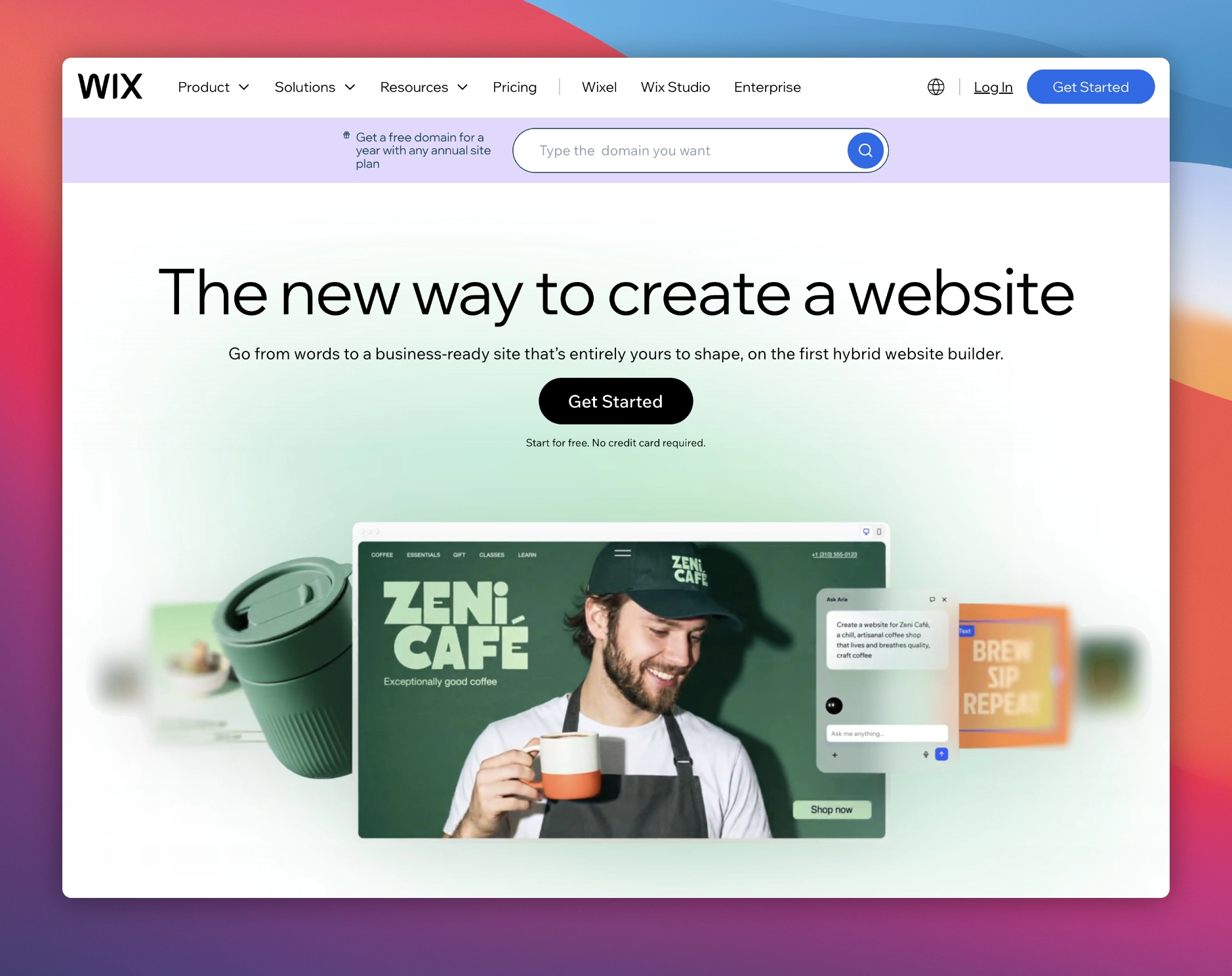
Yes. Wix’s current AI is the Wix AI Website Builder, part of Wix Harmony, with a conversational assistant called Aria that generates and edits a site from plain-language prompts. It is genuinely good at producing a site quickly, but you still wind up with a Wix site that’s locked-in to the Wix platform.
The onboarding is a maze
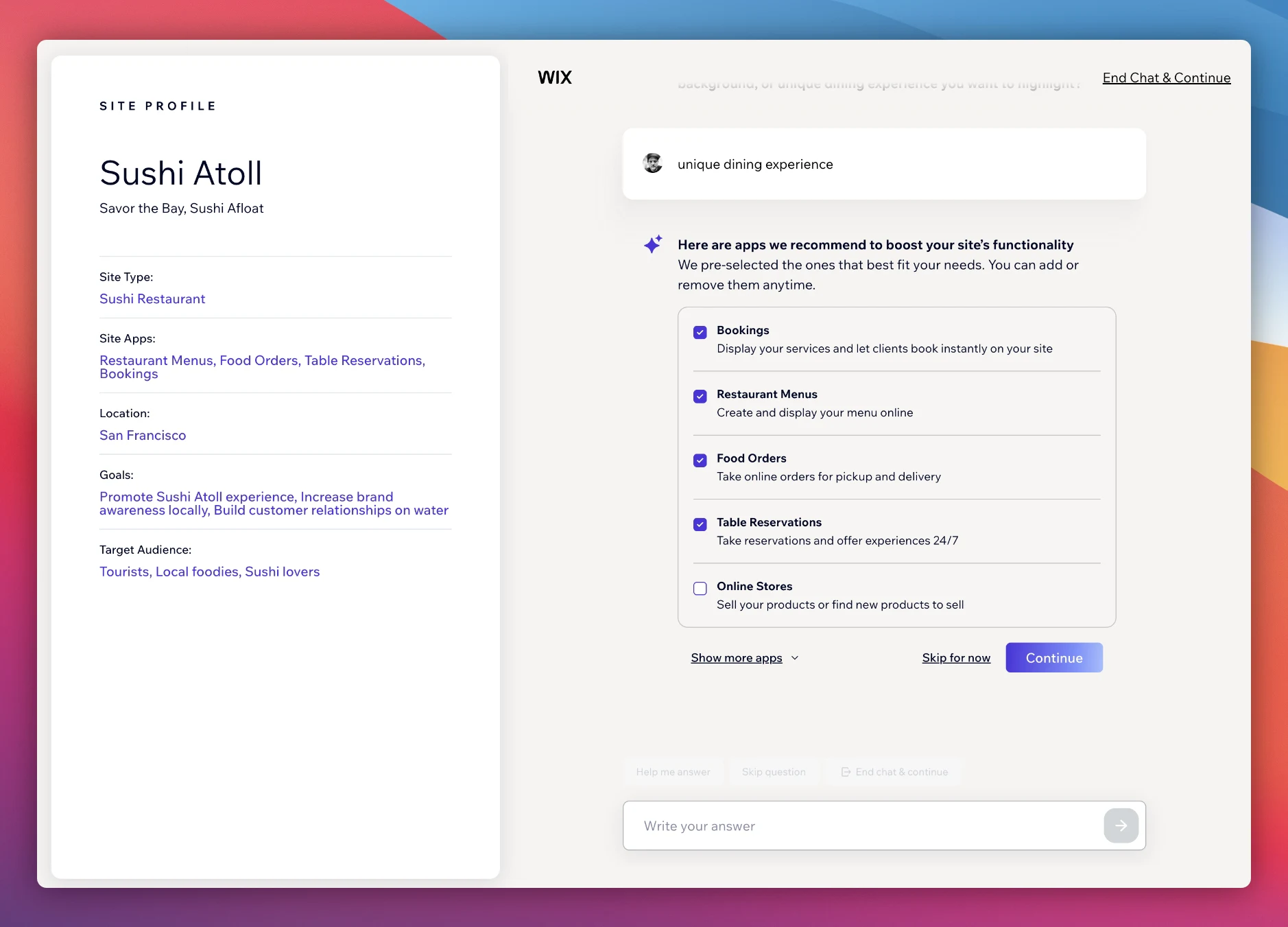
And what Aria hands you first is not your website. It is a setup dashboard with a long to-do list: add a business email, build your menu, set up online ordering and payments, connect a domain, get found on Google. That is a lot to work through, and it is easy to feel unsure what to do next before you have even seen your own site.
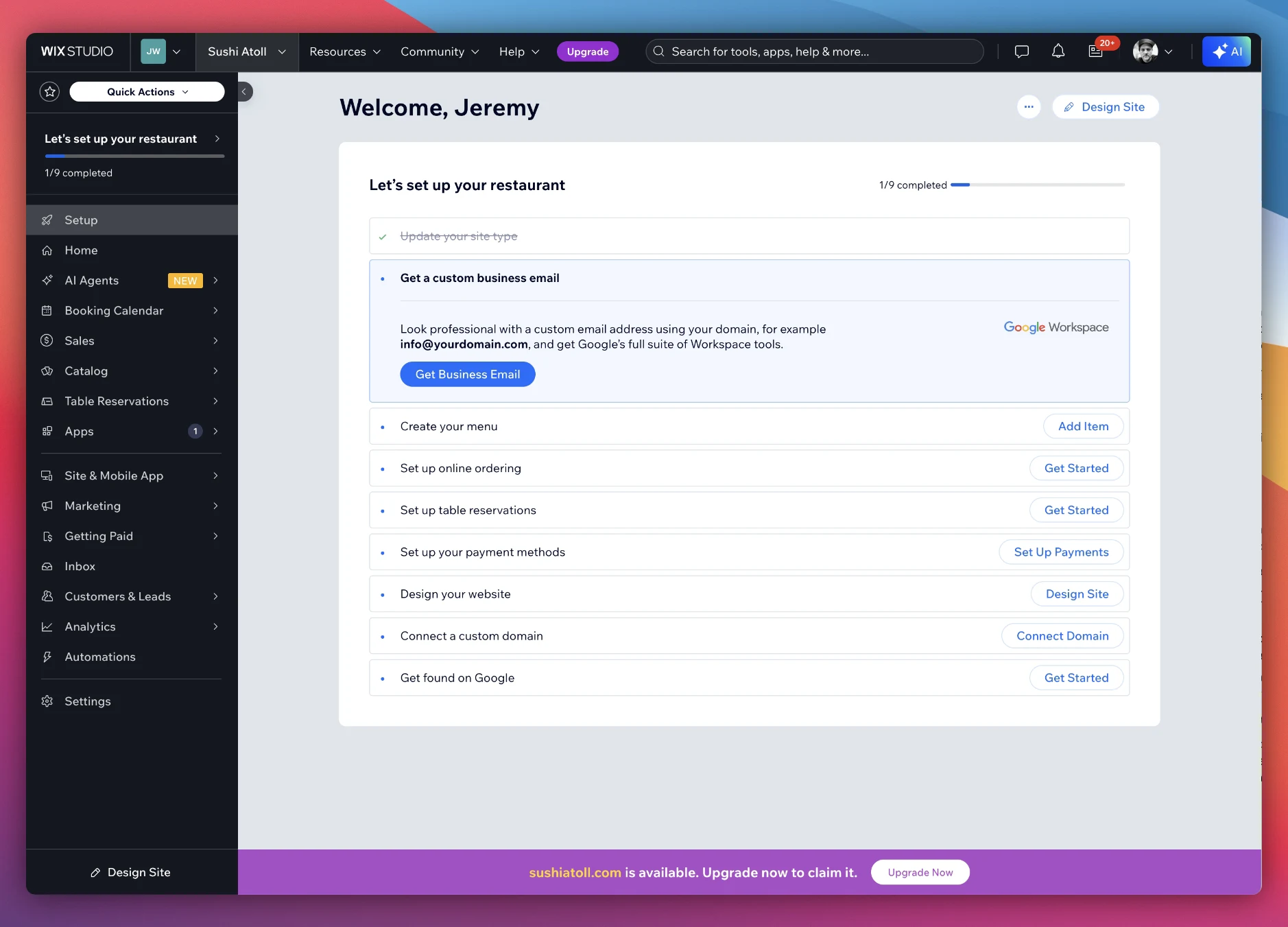
Then, to actually design the site, you click “Design Site” and land in a different-looking chat that asks you to describe what you want from scratch. It is a fair question at that point whether you are starting a new site or still building the one you just set up.
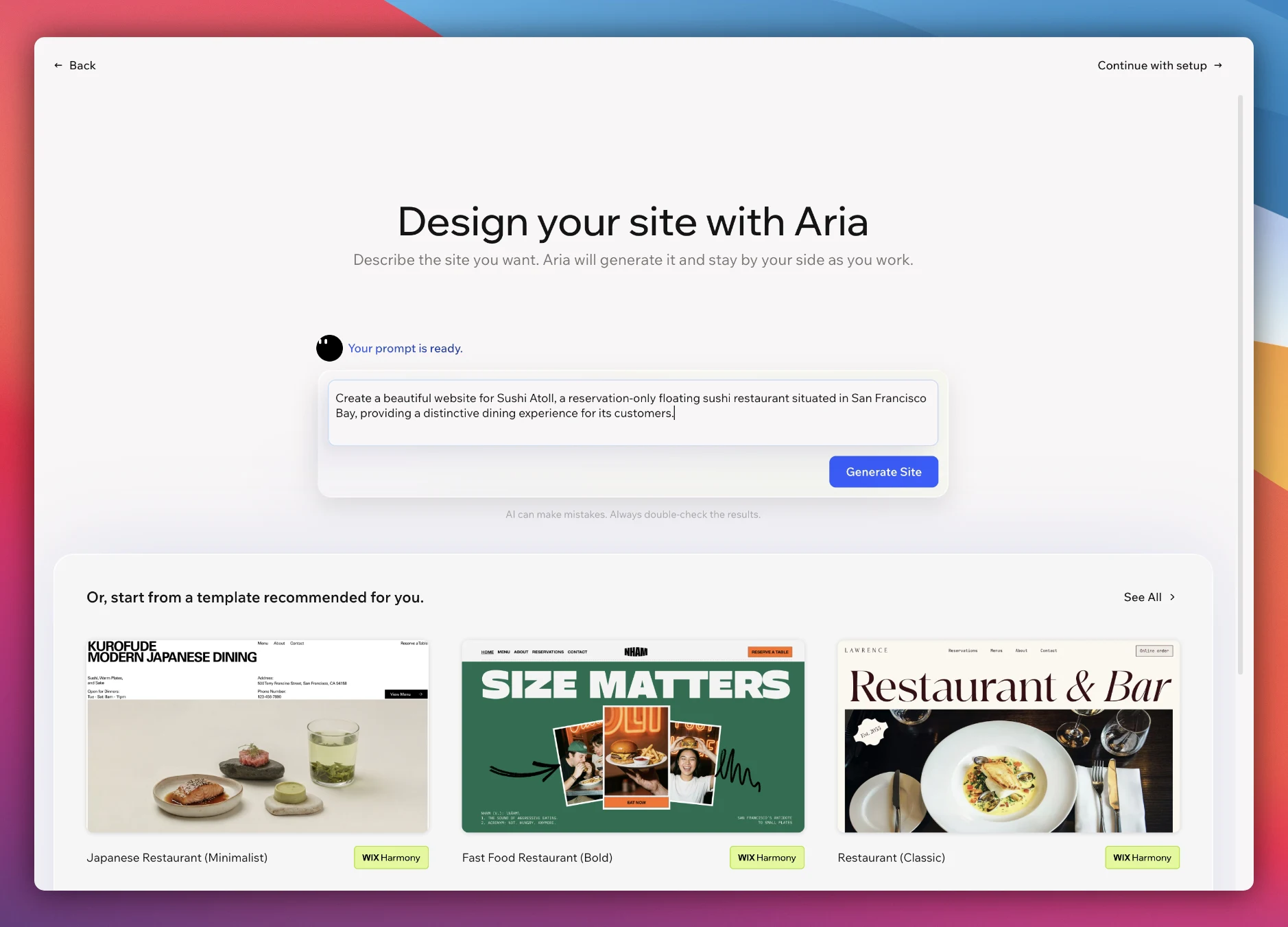
It builds you a Wix site, not a way off Wix
To be fair, it works. After all that, Aria does produce a real, editable site: you can edit text in context, swap and reorder sections, and add pages, the normal site-builder moves.
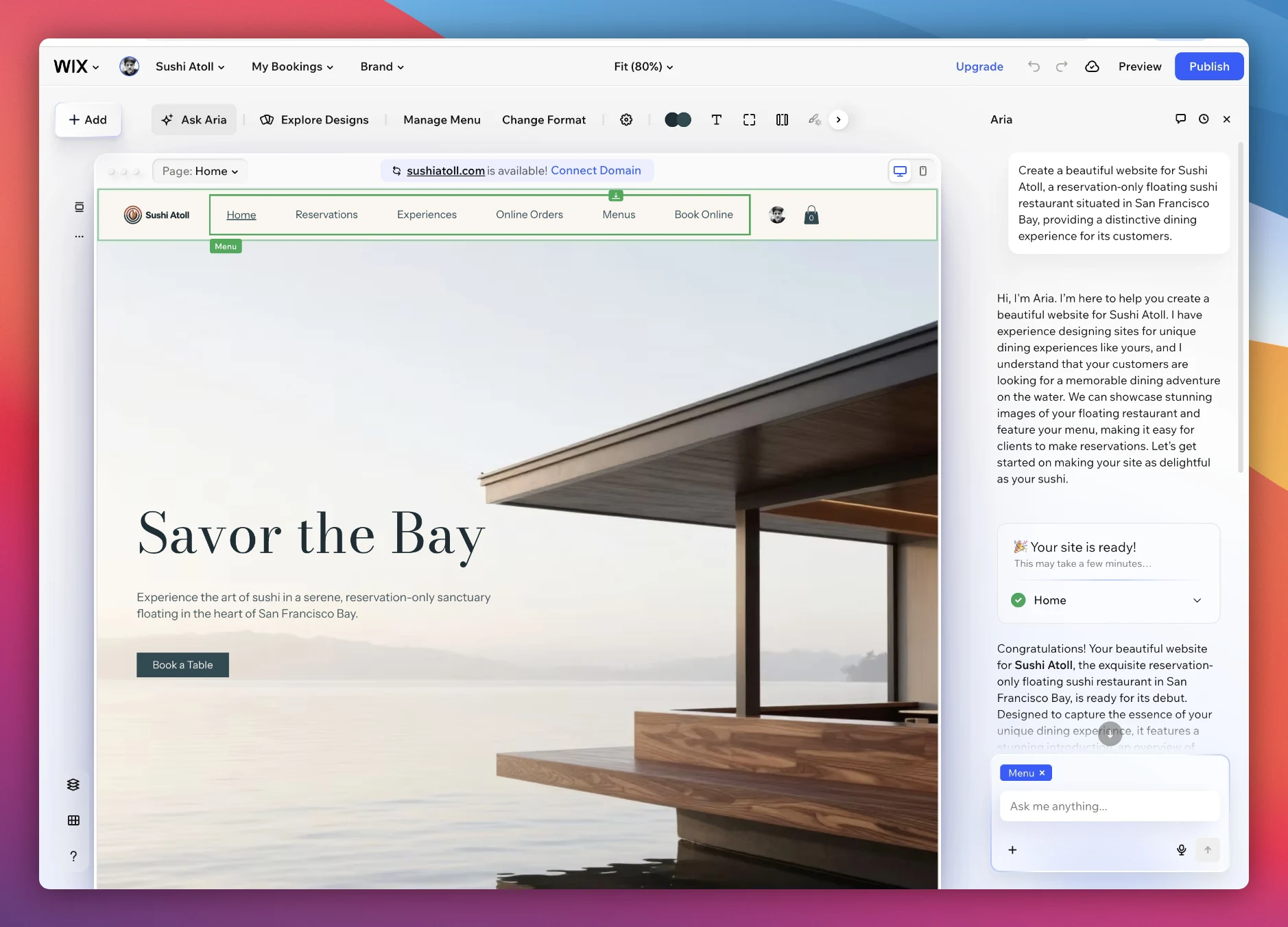
But it is still a Wix site. You still edit an Aria-built site in the Wix Editor, you still host it on Wix, and you cannot export it, so you stay locked to the platform. Wix’s AI is a faster way to build a Wix site; it is not a way to get an editable site you own and could move elsewhere. Those are different questions, and migrating is about the second one.
Wix keeps changing its AI; the lock-in stays
Wix’s AI is also a moving target. The previous version, Wix ADI, launched in 2016 and was retired on November 10, 2024, and existing ADI sites were pushed into the Wix Editor. Building deeper into whatever Wix’s AI happens to be this year does not reduce the lock-in, it deepens it. A migration trades that for your content as editable sections on a platform you can actually leave.
When Wix’s own AI is the right call
If you are happy on Wix and just want a faster way to build or refresh a Wix site, Wix’s AI is the obvious tool and you do not need this guide. This guide is for the case where the Wix relationship itself, the lock-in, the template, or the editing model, is what you want to leave.
Should you move from Wix to Outlyne, or stay?
The honest answer is that it depends on what your Wix site actually is. Outlyne is built for marketing sites, the pages that explain what you do and turn visitors into inquiries, and it rebuilds those well. It is not yet the right home for a site whose core is a store, a booking system, or a membership.
| Outlyne is a good fit when | Stay on Wix, for now, if |
|---|---|
| Your site is mainly marketing and lead generation | You run a store on Wix Stores |
| You want easier editing and a site you can export | You take appointments through Wix Bookings |
| You want a custom design system, not a locked template | You sell memberships or gate content |
| You are happy to rebuild rather than copy every detail | You built custom Velo functionality |
Outlyne does not have ecommerce, bookings, memberships, or gated content yet, so if your business runs on those, plan to keep them on Wix or hold off. Contact and signup forms are fully supported and are recreated in the rebuild as working Outlyne forms. If your Wix site is essentially a brochure that generates leads, it is a strong fit.
Use the move to trim, not just copy
Even when Outlyne is a clear fit, do not recreate every page just because it exists. A migration is a chance to simplify: keep the pages that earn traffic or drive inquiries, and drop the duplicate landing pages, the abandoned blog posts, and the sections nobody reads. A leaner site is easier to keep good.
What happens to your SEO when you rebuild a website?
Your rankings do not live in Wix. They live in a handful of things that you carry with you when you rebuild.
The five things that actually carry your rankings
- Your URLs. Google ranks specific pages at specific addresses. Keep the same paths.
- Your content. The actual words on the page are most of what you rank for. Keep the meaningful text; do not thin it out to make the design cleaner.
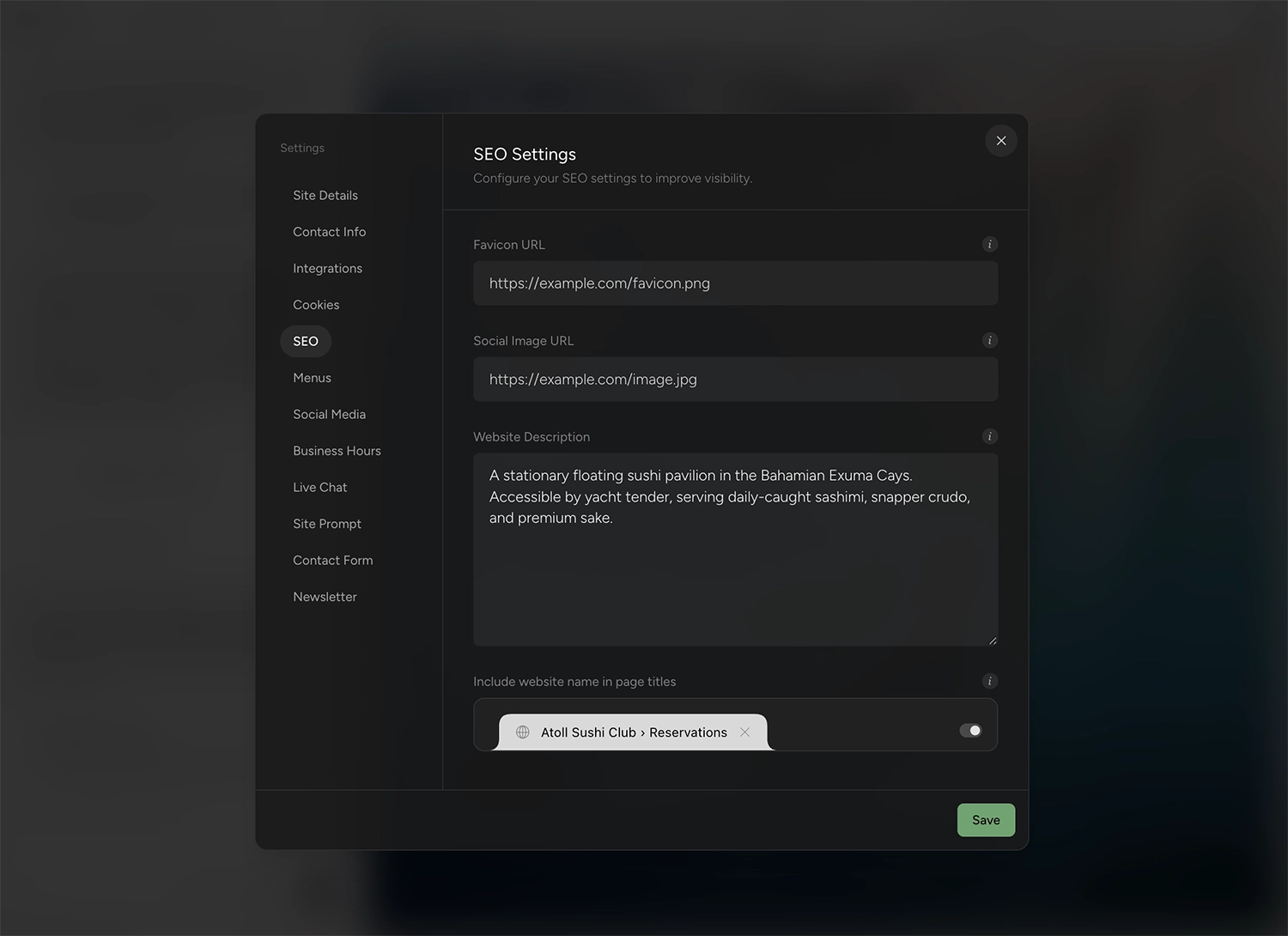
- Your titles and descriptions. The page title and meta description that show in search results.
- Your heading structure. One clear H1 per page and sensible H2s, so both Google and AI answer engines can tell what each page is about.
- Your internal links. The links between your own pages that pass authority around.
Rankings follow content and links, not the platform. Move those intact and your positions come with you.
The Wix-specific things to watch
Wix has a couple of quirks worth checking as you go. Older Wix sites sometimes carry prefixes from Wix’s earlier URL structure, so confirm the exact paths in your sitemap rather than guessing them. If you use Wix Blog, its posts often sit under a /post/ path, and those are the addresses Google has indexed, so preserve those paths deliberately.
The one mistake that actually tanks traffic
If those things survive the move, your rankings have no reason to fall. Most horror stories about redesigns tanking traffic come from breaking one of them, and it is almost always the URLs: pages quietly dropped or renamed so their paths no longer match.
How does Outlyne rebuild your Wix site?
You paste your Wix URL and Outlyne reads the live site, then rebuilds the page you pasted, usually your home page, as a set of named sections: a hero, a features block, testimonials, a contact section, and so on. You can edit it as soon as it is done, and each of the other pages Outlyne read waits in your page menu, ready to build when you open it.
From live pages to named sections
Because parts of a Wix page still render dynamically, the import loads each page like a browser, waits for everything to render, and captures both the text and a picture of the layout. That way the rebuild follows your original structure instead of guessing at it.
Why typed sections beat vibe-coded sites
The other AI route to a rebuild is a vibe-coding tool, an AI that creates your site as code. Tools that generate raw code hand you a one-off pile of markup: to change anything later, you or the AI has to edit that code, and it drifts. Outlyne rebuilds your site into real, typed sections that the system understands. Because it knows a hero is a hero and a testimonial is a testimonial, editing stays a normal act, styling stays consistent across the site, and improvements to a section type roll out everywhere it is used. And instead of a fixed template, the look of the site is a design system built custom for it — colors, type, and spacing you have full control over — so a restyle is a system change, not a page-by-page repaint. You get the speed of AI generation without ending up with a codebase you now have to maintain.
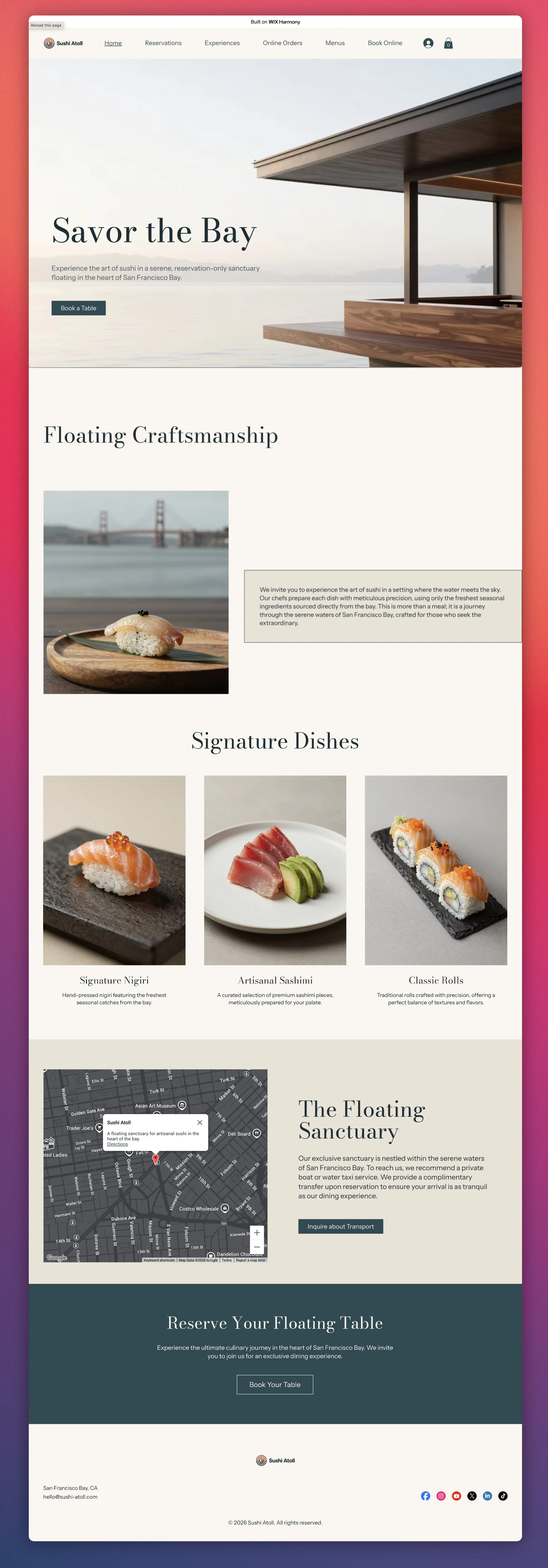
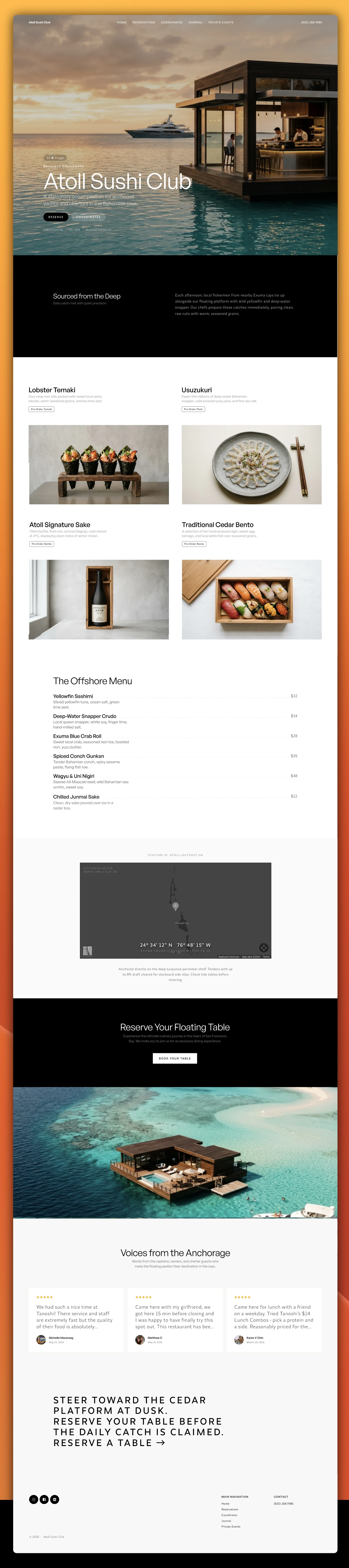
Not a straight copy. As it rebuilt the site, Outlyne asked what was real: our actual location and phone number, the dishes we really serve, and genuine reviews. The result is more accurate than the template I started with, not just moved across.
How do you keep your SEO when leaving Wix?
Work through this in three phases: before you switch, during the rebuild, and after you go live.
Before you switch
- Inventory your URLs. List every page that gets search traffic. Your Wix sitemap, usually at
/sitemap.xml, is the fastest way to get the full list, and the Pages report in Google Search Console shows which of them actually earn clicks. - Note your titles and descriptions. Copy the page title and meta description for each page you are keeping, so you can match them on the new site.
During the rebuild
- Match your paths, or redirect them. Name your new pages so their URLs match your old ones exactly, since matching your paths is what carries the rankings across. Where a path has to change, add a permanent (301) redirect from the old URL to the new one in Outlyne’s site settings, which handles temporary (302) redirects too; a 301 tells Google the page has moved for good, so its ranking follows.
- Preserve headings and content. Keep one H1 per page and the body text that earns your rankings. Rewriting is fine; deleting whole sections to tidy the design is how traffic drops.
- Carry over titles and meta descriptions. Match each page to what you had, unless you are deliberately improving them.
After you go live
- Point your domain and confirm your paths. Once the new site is live on your domain, spot-check that your important pages sit at the URLs you matched, and that each old URL you redirected lands on its new page.
- Resubmit your sitemap. Submit the new sitemap in Google Search Console so it recrawls quickly, then watch the Pages report over the next couple of weeks to confirm your key pages stay indexed.
See the custom domain guide for the DNS steps.
How long does it take to rebuild a Wix site with AI?
The import itself takes minutes, and for a small site you will have a near-complete draft the same afternoon.
The import is fast
The page you paste is ready to look at and edit within minutes. Every other page the import read is already in your page menu, and you build each one when you open it, which takes a free Outlyne account and some of its AI credits.
The polish is the real work
The draft is the start, not the finish. Plan on an afternoon working through it with the Outlyne AI: checking every page, tightening copy, swapping images, having it coach each page toward more inquiries, and getting its advice as you run the SEO checklist above. That is still dramatically faster than a traditional redesign, which is measured in weeks, but it is not a “paste and publish in sixty seconds” claim, and you should not treat it like one.
Large sites take longer, so phase them
A single import reads up to ten pages of your site, starting from the URL you paste, and pages beyond that are ones you add in Outlyne afterward, by hand or with its AI. On a big site, that sets the order for you: get the handful of pages that earn the most traffic right first, then work through the rest while Wix stays live and untouched. Point your domain at the new site only once every page you need is built there — a page that is not built yet stays off the published site — so you are never moving your catalog blind.
What won’t transfer automatically from Wix?
Some things carry over cleanly and some do not, so it helps to know which is which before you start.
What comes across well
Your text, your page structure, and your general layout. That is the bulk of a typical marketing site, and it is exactly the part that carries your rankings. Your images come across as links to your existing site, so they show in the rebuild but still load from your old host; re-upload the ones you are keeping before you take the old site down.
What you will rebuild separately
- Wix App Market widgets. Third-party apps you added inside Wix are Wix-specific and will not follow, so note what each one did and set up an equivalent.
- Stores, bookings, and member areas. Wix Stores, Wix Bookings, and members-only areas are platform features, not content, so plan to set up their equivalents rather than expecting them to migrate.
- Velo custom code. Anything you built with Wix’s Velo development platform is tied to Wix and does not carry over.
- Forms. Your contact and lead forms are rebuilt as Outlyne forms rather than migrated as-is, so double-check the fields and where submissions go.
None of this is a dealbreaker; it is just the list to check so nothing surprises you after launch.
How do you point your domain at the new site?
You point your domain at the new site by updating its DNS. If you bought the domain through Wix, it is still yours; you keep it and repoint it rather than buying a new one.
If you bought your domain through Wix
A domain registered through Wix belongs to you. You reach its DNS settings from your Wix account, and you can either point it at the new site or transfer the registration elsewhere later. The one thing to confirm before you switch is that you can actually reach those DNS settings.
Making the change
The short version is that you add a record at your DNS provider that points your domain to your Outlyne site, then add the domain in Outlyne. DNS changes can take anywhere from a few minutes to a few hours to take effect, so it is normal for the switch not to feel instant.
Do not break your email
One gotcha catches people. If you use email on your domain, such as a Google Workspace or Wix mailbox, your mail is routed by separate MX records. Leave those untouched when you update your DNS, or you can knock your email offline while chasing the website change. Change only the records that point the website, and leave the mail records as they are.
The full walkthrough, including the exact record values, is in the custom domain guide.
So, is Outlyne right for your Wix site?
Here is the short version. Outlyne is a good replacement when your Wix site is mainly a marketing site: pages that explain what you do and bring in inquiries. That is the job Outlyne’s AI is built for. It knows the strategies that make a site convert, whether the goal is captured leads, booked tables, or newsletter signups, and it will point at what to change on your pages and, with your go-ahead, make the changes for you. It is not the right move if your site depends on Wix Stores, Wix Bookings, memberships, gated content, or Velo apps, since those are not part of Outlyne yet.
A low-risk way to decide
You do not have to commit to find out. Paste your Wix URL into Outlyne and rebuild a single page, your homepage is a good place to start, before you change anything on Wix. You get a real look at the result and the editing experience while your existing site stays live and untouched. If it fits, you carry on; if it does not, you have lost nothing.
When you are ready to move the whole site, work through the URL-matching and domain steps above so your rankings come with you.
Frequently asked questions
- Does Wix let you export your website?
- Not as reusable code. Wix lets you export some of your data, such as a store product list, but it does not give you your actual site as HTML you can host elsewhere. That is fine here: Outlyne’s AI reads your live pages the way a visitor or Google does, so you do not need an export at all.
- Will my Google rankings drop if I move off Wix?
- They won’t drop as long as the content Google already ranks you for stays on the same URLs. Rankings follow content and links, not the platform. The way you lose rankings is by dropping pages, changing URLs so they no longer match, or thinning out the text, so keep those intact and you keep your positions.
- Can I keep the domain I bought through Wix?
- Yes. A domain you bought through Wix is still yours; you point it at the new site by updating its DNS. If Wix is only the registrar, you keep the domain and repoint it. The one thing to confirm before you switch is that you can reach the DNS settings for the domain.
- Can I import only some pages of my Wix site?
- Yes. A single import reads up to ten pages, starting from the URL you paste, and rebuilds only that page. The other pages it read are added to the new site by name and path, and you build each one when you open it, with a free Outlyne account and some of its AI credits, so only the ones you want are built. Your Wix site stays live and untouched while you work, and you add any pages beyond those ten in Outlyne, by hand or with its AI, then point your domain over once every page you need is built, since a page that is not built yet stays off the published site.
- Is the rebuilt site still editable afterward?
- Yes. The rebuilt site is made of real, named sections rather than generated code, so changing a headline, swapping an image, or restyling a block is a normal edit in the app, not a code change you have to babysit.
- How much does Outlyne cost compared to Wix?
- Less. Wix’s Core plan is $29 a month, billed annually; Outlyne Pro is $15 a month billed annually, or $20 month to month, and the free tier lets you rebuild your site and try the editor before paying anything. What you get for it is the bigger difference. Wix is a legacy builder built around lock-in, with no export. Outlyne coaches your pages toward more inquiries, builds you a custom design system you have full control over, and supports full website export, so your site and your data stay yours.
- Should I use Wix’s own AI instead of migrating?
- It depends on what you want. Wix’s own AI, the Wix AI Website Builder with its Aria assistant, is great for building a site fast, but that site stays on Wix: you edit it in the Wix Editor, host it on Wix, and cannot export it. If you want an editable site you own, with full export so you can move it elsewhere, that is what migrating gives you. If you are happy staying on Wix, its own AI is the simpler choice.
- Should I move my Wix site to Outlyne, or stay on Wix?
- Move it if the site is mainly marketing: pages that explain what you do and bring in inquiries, and you want an AI that coaches those pages toward more of them. Stay on Wix if your site runs on Wix Stores, Wix Bookings, memberships, gated content, or Velo apps, since Outlyne does not have those yet. A good way to decide is to rebuild one page in Outlyne before changing anything on Wix.